
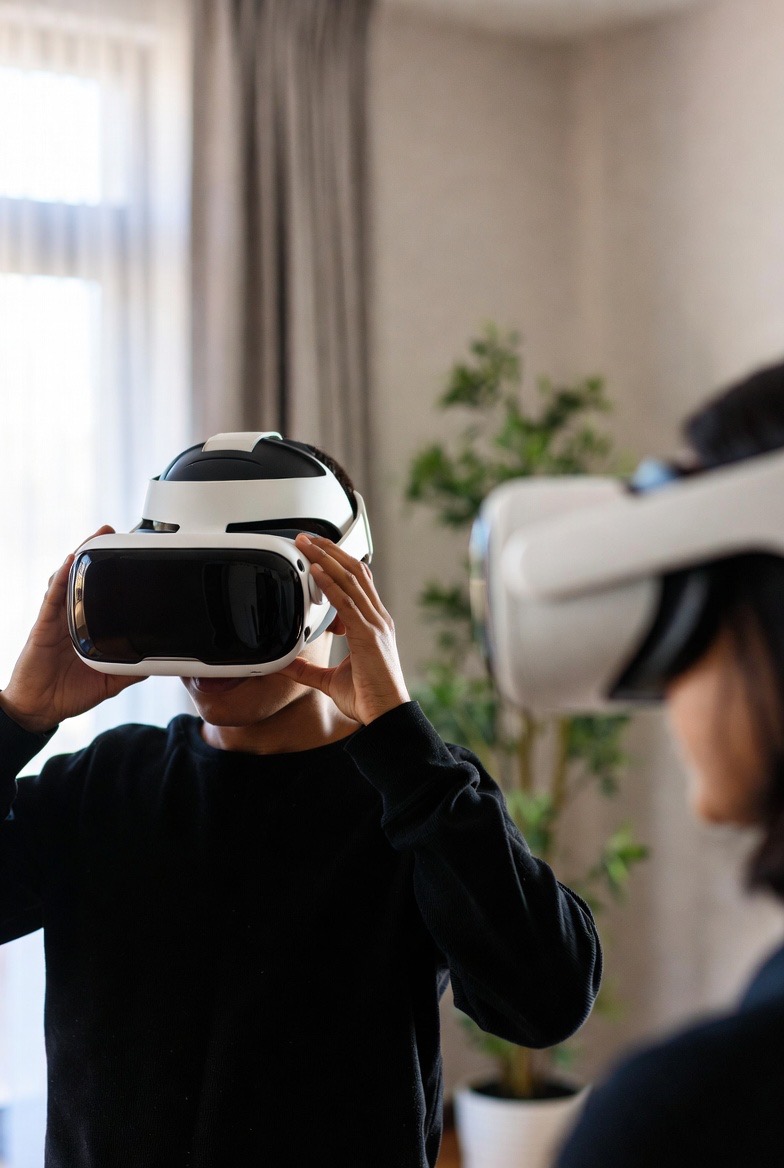

An in-depth analysis of the Metaverse phenomenon: how tech giants bet billions on virtual worlds, why the vision failed to materialize, and what the future holds for immersive digital experiences.
Introduction: The Metaverse Dream
In October 2021, Mark Zuckerberg stood on stage and announced that Facebook would rebrand to Meta, signaling a fundamental shift in the company's direction. The Metaverse, he proclaimed, was the future of the internet—a persistent, immersive 3D world where people would work, play, shop, and socialize through their digital avatars.
The announcement sent shockwaves through the tech industry. Suddenly, every major tech company was racing to stake their claim in the Metaverse. Microsoft acquired gaming giant Activision Blizzard for $69 billion. Apple reportedly accelerated development of its mixed-reality headset. Investment banks published breathless reports projecting the Metaverse market would reach $800 billion to $13 trillion by 2030.
Fast forward to 2026, and the Metaverse narrative has fundamentally shifted. Meta has written off tens of billions in losses. Most consumers still don't own VR headsets. The immersive virtual worlds promised just a few years ago remain largely unpopulated. What happened? How did one of tech's biggest bets become one of its most cautionary tales?
The Rise: Building the Hype
The Perfect Storm of Circumstances
The Metaverse hype didn't emerge in a vacuum. Several converging trends created the perfect conditions for this technological frenzy:
- The COVID-19 Pandemic: Global lockdowns forced hundreds of millions online, normalizing remote work, virtual events, and digital socialization. Suddenly, spending hours in digital spaces didn't seem so strange.
- Gaming's Mainstream Moment: Games like Fortnite, Roblox, and Minecraft demonstrated that massive virtual worlds could attract hundreds of millions of users and generate billions in revenue.
- NFT Mania: The explosion of NFTs and digital ownership created excitement around virtual assets and economies, suggesting people would pay real money for digital goods.
- VR Technology Maturation: After years of development, VR headsets like the Oculus Quest 2 finally achieved decent quality at consumer-friendly prices.
- Tech Giant Saturation: Major platforms were searching for the "next big thing" as mobile growth plateaued and regulatory scrutiny intensified.
The Vision: What Was Promised
The Metaverse vision that captured imaginations was borrowed heavily from science fiction—particularly Neal Stephenson's 1992 novel "Snow Crash" and Ernest Cline's "Ready Player One." The promise included:
- Persistent Virtual Worlds: Always-on 3D environments that continued existing whether you were logged in or not, like the real world.
- Digital Identity and Avatars: Customizable digital representations that would become your identity across multiple platforms and experiences.
- Virtual Economy: A functioning economy where users could create, buy, sell, and trade virtual goods, services, and experiences.
- Interoperability: The ability to take your avatar, identity, and possessions seamlessly between different virtual worlds and platforms.
- Immersive Experiences: Revolutionary social interactions, entertainment, work, and commerce conducted in three-dimensional space.
- Decentralization: A Web3-powered infrastructure ensuring users owned their data, identities, and digital assets rather than platforms controlling everything.
The Investment Tsunami
Money poured into Metaverse-related ventures at an unprecedented rate:
- Meta committed to spending at least $10 billion annually on Reality Labs, its Metaverse division
- Microsoft's $69 billion Activision Blizzard acquisition was explicitly tied to Metaverse ambitions
- Venture capital invested over $120 billion in Metaverse and Web3 projects between 2021-2022
- Virtual real estate platforms saw digital land parcels selling for millions of dollars
- Major brands from Nike to Gucci to Walmart announced Metaverse initiatives
The message was clear: miss the Metaverse, and you'd be left behind in the next evolution of the internet.
The Peak: Peak Metaverse Euphoria (2021-2022)
Meta's All-In Bet
Meta didn't just dip its toes into the Metaverse—it cannonballed in. Beyond the company rebrand, Meta committed to transforming itself from a social media company into a Metaverse company. The strategy included:
- Launching Horizon Worlds, its flagship social VR platform
- Heavily subsidizing Quest VR headsets to drive adoption
- Building a virtual economy with digital goods and avatar customization
- Recruiting thousands of engineers to Reality Labs
- Creating enterprise Metaverse tools for remote work
Zuckerberg repeatedly told investors and the public that this was a long-term bet—the Metaverse wouldn't materialize overnight, but it was inevitable. He asked for patience as Meta invested billions to build the future.
The Corporate Rush
Virtually every major brand felt compelled to announce some Metaverse initiative, creating a corporate FOMO (fear of missing out) phenomenon:
- Fashion Brands: Gucci, Balenciaga, and Nike launched virtual clothing and accessories, with Nike acquiring virtual sneaker company RTFKT for an undisclosed sum.
- Retailers: Walmart filed trademarks for virtual goods and currencies. Target and Best Buy explored virtual storefronts.
- Entertainment: Disney appointed a VP of the Metaverse. Music artists held concerts in Fortnite and Roblox.
- Financial Services: JPMorgan opened a lounge in Decentraland. HSBC purchased virtual land for undisclosed millions.
- Automotive: BMW, Ferrari, and Hyundai created virtual showrooms and experiences.
The pervasiveness of these announcements created a self-reinforcing cycle: companies announced Metaverse initiatives to avoid looking technologically backward, which created more pressure for other companies to do the same.
Virtual Real Estate Gold Rush
Perhaps the most speculative aspect of the Metaverse boom was virtual real estate. Platforms like Decentraland, The Sandbox, and Somnium Space sold digital land parcels as NFTs, with prices reaching absurd heights:
- A plot of virtual land near Snoop Dogg's Sandbox property sold for $450,000
- Republic Realm paid $4.3 million for land in The Sandbox
- Decentraland parcels in prime virtual locations sold for over $1 million
The pitch was simple: virtual land, like physical land, is scarce. As the Metaverse grows, prime virtual real estate will appreciate dramatically. Early buyers would be the digital equivalent of Manhattan property owners.
The Cracks Appear: Reality Sets In
User Adoption Problems
As 2022 progressed, reports began emerging that revealed troubling realities:
- Low Engagement: Internal Meta documents leaked showing Horizon Worlds had fewer than 200,000 monthly active users—a fraction of what was needed to justify the investment.
- User Retention Issues: Most users who tried VR social platforms didn't return. The average session time was low, and drop-off rates were high.
- Empty Virtual Worlds: Journalists visiting Metaverse platforms found them largely deserted, more ghost town than bustling digital city.
- Technical Limitations: VR headsets remained bulky, uncomfortable for extended use, and caused motion sickness in many users.
The Experience Gap
The Metaverse experiences that actually launched fell dramatically short of the promised vision:
- Poor Graphics: Most Metaverse platforms featured simplistic graphics that looked dated compared to modern video games, let alone the photorealistic worlds promised in promotional materials.
- Limited Functionality: Rather than revolutionary new experiences, most Metaverse platforms offered basic social interactions and mini-games that felt inferior to existing alternatives.
- Clunky Interfaces: Navigation and interaction in VR remained awkward. Simple tasks like typing or precise movements were frustrating.
- Lack of Compelling Content: There simply wasn't much to do in these virtual worlds that couldn't be done better in traditional games or social media.
The Economics Don't Add Up
The virtual economy that was supposed to flourish faced fundamental problems:
- Artificial Scarcity: Digital goods can be infinitely replicated. Creating scarcity through NFTs felt arbitrary and didn't resonate with most consumers.
- Pyramid Scheme Dynamics: Much of the virtual real estate market was driven by speculation, not actual utility. When new buyers stopped arriving, prices collapsed.
- Platform Lock-In: Despite promises of interoperability, digital assets remained siloed to specific platforms, limiting their value.
- Real Value Question: Most people struggled to understand why they should pay significant sums for virtual goods with no tangible utility.
The Fall: Reality Bites Back
Meta's Mounting Losses
As 2023 progressed, Meta's Reality Labs division became a source of significant concern:
- Q1 2022 - Q4 2023: Reality Labs lost approximately $40 billion across these eight quarters
- Investor Pressure: Shareholders increasingly questioned the wisdom of Zuckerberg's Metaverse obsession as the company's stock price tumbled
- Restructuring: Meta laid off over 21,000 employees, including many from Reality Labs, as the company declared 2023 the "Year of Efficiency"
- Narrative Shift: Zuckerberg slowly began de-emphasizing the Metaverse in public statements, pivoting toward AI as the company's future
Virtual Real Estate Crash
The virtual real estate bubble burst spectacularly:
- Virtual land prices fell 85-95% from their 2021-2022 peaks
- Trading volumes dried up as speculators realized there were no new buyers
- Prime virtual properties that sold for millions became essentially worthless
- Platforms like Decentraland reported fewer than 1,000 daily active users
The virtual land gold rush had been a classic bubble—prices driven by speculation rather than fundamental value, with inevitable collapse when the greater fool theory ran out of fools.
Corporate Retreats
One by one, companies that had rushed into the Metaverse quietly scaled back or abandoned their initiatives:
- Disney eliminated its entire Metaverse division in 2023 cost-cutting measures
- Walmart abandoned most of its virtual world experiments
- Many brand Metaverse activations were revealed as one-off marketing stunts with no ongoing commitment
- Virtual stores and experiences launched with fanfare were quietly shuttered
The Metaverse line item that looked essential in 2022 budget meetings became an embarrassing write-off by 2024.
The Regulatory Reality
Regulatory concerns that were initially overlooked began surfacing:
- Data Privacy: VR platforms collect unprecedented amounts of biometric and behavioral data, raising serious privacy concerns
- Content Moderation: Early Metaverse platforms became havens for harassment, inappropriate behavior, and harmful content that was difficult to moderate
- Financial Regulation: Virtual economies and NFTs attracted scrutiny from financial regulators concerned about securities violations
- Antitrust Issues: The vision of Meta-controlled virtual worlds raised competitive concerns from regulators already investigating the company
Why the Metaverse Failed (So Far)
Technology Wasn't Ready
The fundamental technology required for the promised Metaverse experience simply doesn't exist yet:
- Hardware Limitations: VR headsets remain bulky, expensive, and uncomfortable for extended use. The fantasy of lightweight, stylish AR glasses is still years away.
- Network Requirements: Truly immersive, persistent virtual worlds require massive amounts of bandwidth and computational power that current infrastructure can't reliably deliver.
- Graphics and Rendering: Creating photorealistic virtual worlds that can accommodate millions of users simultaneously is far beyond current capabilities.
- Interface Challenges: Natural interaction in virtual spaces requires solving hard problems in haptic feedback, motion tracking, and spatial audio that remain unsolved.
No Clear Problem Being Solved
Perhaps the most fundamental issue: the Metaverse was a solution in search of a problem:
- Social Interaction: Most people found video calls, messaging, and traditional social media sufficient for remote communication. VR meetings added friction without meaningful benefits.
- Entertainment: Traditional video games provided better experiences than Metaverse platforms. Why choose a janky virtual world over a polished game?
- Shopping: E-commerce already works well. Walking through a virtual store with an avatar was slower and more cumbersome than browsing a website.
- Work: Remote work tools like Zoom and Slack proved effective. VR added complexity without improving productivity.
The Metaverse was technology-driven rather than need-driven. Companies built it because they could (theoretically), not because consumers were demanding it.
Economic Model Flaws
The economic foundation of the Metaverse never made sense:
- Artificial Scarcity: Digital scarcity is fundamentally artificial. Users instinctively rejected paying significant sums for virtual goods that cost nothing to replicate.
- Platform Control: Despite Web3 rhetoric, major Metaverse platforms maintained centralized control, making "ownership" of digital assets questionable.
- Speculative Bubble: Much of the economic activity was speculation-driven, not based on actual utility or demand.
- Value Extraction: The business models often felt exploitative—extracting money from users without providing proportional value.
Misunderstanding Human Behavior
The Metaverse vision fundamentally misread what people actually want:
- Digital Fatigue: After spending all day on screens for work, most people don't want to strap on a headset for more screen time.
- Physical Reality Preference: Given the choice, most people prefer real-world interactions and experiences to virtual ones.
- Simplicity Over Complexity: The Metaverse added complexity and friction to activities people could do more easily in existing ways.
- Social Dynamics: Human social interaction relies on subtle cues, body language, and spontaneity that virtual environments struggle to replicate.
What Succeeded: Gaming and Specific Use Cases
Gaming Platforms
Interestingly, while the grand Metaverse vision failed, certain gaming platforms demonstrated that persistent virtual worlds can work:
- Roblox: Continues to thrive with 70+ million daily active users, primarily children and teenagers, creating and playing user-generated games.
- Fortnite: Evolved beyond a battle royale game into a social platform where users hang out, attend events, and experience content.
- VRChat: Maintains a dedicated community of VR enthusiasts who genuinely enjoy social interaction in virtual spaces.
- Minecraft: Remains enormously popular as a creative sandbox where players build worlds and socialize.
The key difference: these platforms succeeded by being fun games first, not by promising to revolutionize the internet. They attracted users organically by providing enjoyable experiences, not through billions in marketing and hype.
Niche Professional Applications
VR and immersive technology found legitimate success in specific professional contexts:
- Training and Simulation: VR training for surgeons, pilots, and other professionals where practice in a safe environment is valuable
- Design and Visualization: Architects and designers using VR to visualize spaces before they're built
- Remote Collaboration: Specific industries where 3D visualization of complex products or systems adds value
- Healthcare: VR therapy for PTSD, phobias, and pain management showing promising results
These applications succeeded because they solved specific problems where VR's unique capabilities provided clear advantages.
What the Future Actually Holds
Evolution, Not Revolution
The Metaverse won't emerge as a sudden revolutionary transformation. Instead, immersive technology will evolve gradually:
- Incremental Adoption: VR and AR will be adopted gradually in contexts where they provide clear value, not as wholesale replacement for existing digital experiences
- Mixed Reality: AR overlaying digital information on the physical world may prove more practical than fully immersive VR
- Spatial Computing: Apple's Vision Pro represents a different approach—not "Metaverse" but spatial computing integrated into daily life
- Gaming-Led Growth: Gaming will continue driving VR adoption, with other use cases emerging organically
The Technology Timeline
For truly compelling immersive experiences, several technological breakthroughs are still needed:
- 2026-2028: Continued improvement in VR headset comfort, resolution, and field of view. AR glasses achieving basic functionality.
- 2028-2030: More capable AR glasses enabling practical everyday use. VR becoming mainstream for gaming and specific applications.
- 2030-2035: Potential for lightweight, stylish AR glasses that could achieve mass adoption. VR technology mature enough for extended comfortable use.
- Beyond 2035: The original Metaverse vision might become technically feasible, but adoption will depend on whether it solves real problems.
Lessons Learned
The Metaverse hype cycle offers important lessons for technology adoption:
- Technology Doesn't Drive Adoption Alone: Cool technology isn't enough. Solutions need to solve real problems better than existing alternatives.
- Hype and Reality Diverge: Marketing visions and technical reality often have little in common. Skepticism is healthy.
- Network Effects Take Time: True networks require organic growth, not forced adoption through massive investment.
- Human Behavior Is Stubborn: People resist changing comfortable habits without compelling reasons.
- Gaming Shows the Way: The most successful immersive experiences have been games that prioritized fun over revolutionary visions.
Meta's Pivot and the AI Shift
From Metaverse to AI
By 2024-2025, Meta had significantly pivoted its narrative:
- AI Investment: Meta dramatically increased investment in AI, releasing competitive LLMs like Llama and integrating AI across its products
- Quiet Metaverse: While Reality Labs continues, Zuckerberg rarely emphasizes the Metaverse in public communications
- Smart Glasses: Meta's Ray-Ban smart glasses (without VR) found modest success, suggesting a more practical approach to wearable technology
- Core Business Focus: Renewed emphasis on Instagram, WhatsApp, and Facebook's core advertising business
The company hasn't explicitly admitted defeat on the Metaverse, but the shift in priorities is unmistakable. The tens of billions invested in Reality Labs represent one of tech's most expensive strategic pivots.
What Happens to Reality Labs?
Meta's VR division continues existing but with moderated expectations:
- Quest headsets continue selling to gaming enthusiasts and VR hobbyists
- Development of next-generation hardware proceeds, but with more realistic timelines
- Focus shifting toward specific use cases rather than transforming human existence
- Integration of AI into VR experiences to improve quality and interaction
Conclusion: Hype, Reality, and the Long Road Ahead
The Metaverse saga represents a classic technology hype cycle taken to an extreme. What was promised as an inevitable revolution in how humans interact with technology and each other turned out to be premature by at least a decade, possibly longer.
This doesn't mean immersive technology has no future. VR and AR will continue evolving, finding applications where their unique capabilities provide genuine value. Gaming will drive continued hardware improvements. Specific professional use cases will expand. Gradually, these technologies will become more capable and more integrated into daily life.
But the grand vision—persistent, interoperable virtual worlds where billions of people work, play, and socialize—remains far in the future, if it arrives at all. The technology isn't ready. The business models don't work. Most importantly, it's not clear that people actually want this future.
The Metaverse story offers valuable lessons about the difference between technological possibility and human desirability, between marketing visions and practical reality, and between investor enthusiasm and sustainable business models. It's a reminder that even the biggest tech companies with the deepest pockets can't force adoption of technology that doesn't solve real problems better than existing alternatives.
For Mark Zuckerberg and Meta, the Metaverse bet represents an expensive lesson in the limits of corporate ambition and the unpredictability of technological change. The company survives, pivots, and continues, but the tens of billions invested in a future that didn't materialize stand as one of the most dramatic strategic misfires in technology history.
Perhaps in 2035, we'll look back and realize that 2026 was simply too early—that the Metaverse vision was sound but the timing was wrong. Or perhaps we'll conclude that the entire concept was fundamentally flawed, a collective delusion driven by pandemic isolation, speculative excess, and corporate desperation to find the next big thing.
Either way, the rise and fall of the Metaverse will be studied in business schools and technology courses for decades to come as a case study in hype, ambition, and the messy reality of technological progress.
Stay Informed on Tech Trends
Get balanced analysis of emerging technologies without the hype.
Explore More Articles