
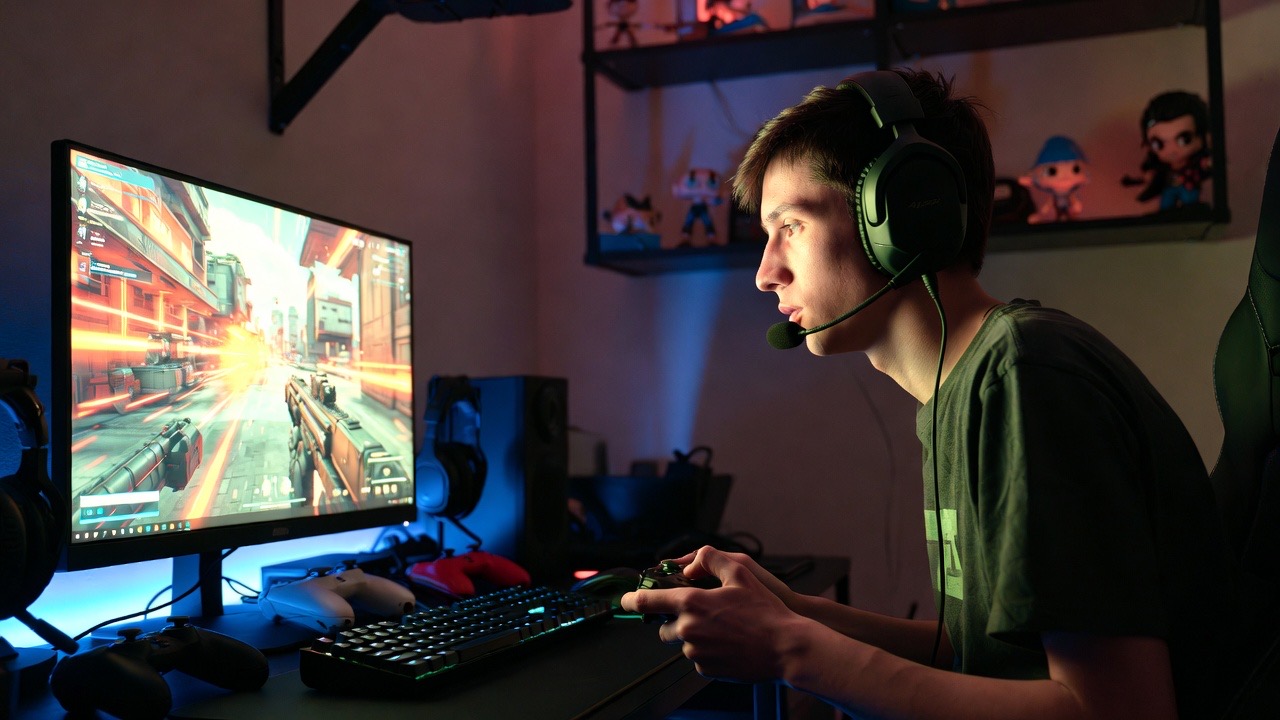
Explore how gaming is being revolutionized by AI, cloud technology, and immersive experiences. From neural gameplay to cross-platform ecosystems, discover what's shaping the future of interactive entertainment.
Introduction: Gaming's Transformative Era
The gaming industry in 2026 stands at the intersection of unprecedented technological advancement and creative innovation. With global revenues exceeding $200 billion annually, gaming has evolved from a niche hobby to a dominant force in entertainment, rivaling and often surpassing film and music in cultural impact and economic significance.
This isn't your parent's gaming industry. The boundaries between platforms are dissolving, artificial intelligence is creating personalized gaming experiences, and cloud technology is making high-end gaming accessible to anyone with an internet connection. The question is no longer whether gaming will shape the future of entertainment, but how profoundly it will transform the way we interact with digital experiences.
The Cloud Gaming Revolution
Breaking the Hardware Barrier
Cloud gaming has finally delivered on its long-promised potential. Services like Xbox Cloud Gaming (formerly xCloud), NVIDIA GeForce NOW, PlayStation Plus Premium, and Amazon Luna have matured to the point where latency is no longer a significant barrier for most players.
The implications are profound:
- Accessibility: Players no longer need expensive gaming PCs or consoles to experience AAA titles
- Instant Play: Games launch in seconds without downloads or installations
- Cross-Device Gaming: Start playing on your TV, continue on your phone during your commute
- Always Updated: No more waiting for patches or updates
- Environmental Impact: Centralized data centers are more energy-efficient than millions of individual gaming rigs
The Technology Behind the Magic
Several technological breakthroughs have made cloud gaming viable:
Edge Computing: By deploying servers closer to users, providers have reduced latency to sub-20ms in most urban areas, making even competitive gaming feasible.
Advanced Video Compression: New codecs like AV2 deliver 4K gaming at reasonable bandwidth requirements, with adaptive quality ensuring smooth gameplay even on slower connections.
Predictive Input Processing: AI algorithms predict player inputs milliseconds in advance, compensating for network latency in ways that feel natural to players.
Artificial Intelligence: The Game Changer
Dynamic NPCs and Living Worlds
The most visible impact of AI in gaming is the transformation of non-player characters (NPCs) from scripted automatons to seemingly intelligent beings. Large language models and sophisticated behavior trees enable NPCs to:
- Engage in natural, context-aware conversations
- Remember past interactions and develop relationships with players
- Adapt their behavior based on player choices
- Create emergent gameplay scenarios that developers never explicitly programmed
Procedural Content Generation 2.0
AI-powered procedural generation has evolved beyond random dungeon layouts. Modern systems create:
- Narrative Content: Side quests, dialogue trees, and story arcs tailored to individual players
- Visual Assets: Textures, models, and environments generated in real-time
- Music and Sound: Adaptive soundtracks that respond to gameplay and player emotion
- Game Balance: Difficulty that adjusts not just to player skill, but to their engagement patterns
AI-Assisted Development
AI isn't just transforming gameplay; it's revolutionizing game development:
- Bug detection and automatic fixing
- Playtesting simulations with thousands of AI agents
- Asset creation and optimization
- Natural language to code for rapid prototyping
This acceleration in development cycles means indie developers can create experiences that previously required AAA budgets.
The Rise of Neural Gaming Interfaces
From Controllers to Thoughts
Brain-computer interfaces (BCIs) are making their first mainstream appearance in gaming. While still in early stages, devices like the Neuralink Gaming Suite and OpenBCI's consumer products are enabling:
- Thought-based menu navigation
- Emotion detection for adaptive gameplay
- Attention tracking for UI optimization
- Supplementary control inputs alongside traditional controllers
The Accessibility Revolution
Neural interfaces are particularly transformative for accessibility, enabling players with limited mobility to compete on equal footing. The gaming community has embraced this technology, with major esports leagues creating neural-input divisions.
Cross-Platform Ecosystems: The End of Console Wars
Universal Gaming Profiles
The traditional concept of "console exclusives" is evolving. Major publishers now embrace cross-platform releases, and even platform holders like Microsoft, Sony, and Nintendo are increasingly participating in shared ecosystems.
Modern gamers expect:
- Cross-platform multiplayer by default
- Unified friends lists across platforms
- Progress and purchases that transfer between platforms
- Play anywhere, on any device
The Subscription Model Dominates
Game Pass, PlayStation Plus, and similar services have fundamentally changed how players discover and consume games. With hundreds of titles available for a monthly fee, the model encourages experimentation and has proven particularly beneficial for indie developers gaining exposure.
Immersive Technologies: VR, AR, and Mixed Reality
VR Finally Finds Its Audience
After years of false starts, VR gaming has achieved mainstream adoption thanks to:
- Lighter, Wireless Headsets: Modern VR devices weigh under 300 grams and require no external sensors
- Higher Resolution: 4K per eye is now standard, eliminating the "screen door effect"
- Better Content: AAA studios are creating VR-first experiences, not just ports
- Social VR: Platforms enabling natural interaction with friends in virtual spaces
Augmented Reality Gaming
AR gaming, pioneered by Pokémon GO, has matured with devices like Apple Vision Pro and Meta's AR glasses enabling:
- Persistent world-anchored games that transform your environment
- Multiplayer experiences that blend digital and physical worlds
- Location-based adventures that encourage exploration
The Social Gaming Phenomenon
Gaming as Social Infrastructure
For younger generations, gaming platforms are primary social spaces. Games like Fortnite, Roblox, and Minecraft function as:
- Virtual hangout spaces where friends meet
- Concert venues and event spaces
- Creative platforms for user-generated content
- Educational environments for learning and collaboration
The Creator Economy in Gaming
User-generated content has become a major economic force. Platforms that enable players to create, share, and monetize content have created thousands of full-time creators. Roblox alone paid out over $800 million to creators in 2025.
Esports: From Niche to Mainstream
Professional Gaming's Growth
Esports viewership now rivals traditional sports, with the League of Legends World Championship drawing over 100 million concurrent viewers in 2025. Prize pools exceed $50 million for major tournaments, and professional gamers are household names with endorsement deals rivaling traditional athletes.
The Infrastructure Boom
- Purpose-built esports arenas in major cities worldwide
- University esports programs with full scholarships
- Professional training facilities with coaches, nutritionists, and sports psychologists
- Broadcasting rights commanding billions from traditional media companies
Blockchain Gaming: Finding Its Place
Beyond the Hype
After the cryptocurrency crash of 2022-2023, blockchain gaming has found more sustainable applications:
- True Digital Ownership: Players actually own their in-game items and can transfer them between compatible games
- Player-Driven Economies: Some games have created functioning economies where players earn real income
- Interoperable Assets: Characters and items that work across multiple games
However, the technology remains controversial due to environmental concerns and speculation-driven gameplay that prioritizes profit over fun.
Mobile Gaming: The Dominant Platform
More Than Casual Games
Mobile gaming generates over $100 billion annually, more than PC and console gaming combined. Modern smartphones rival last-generation consoles in power, enabling:
- Console-quality graphics and gameplay
- Controller support for traditional gaming experiences
- Cloud gaming access for AAA titles
- Innovative touch and motion-based gameplay
The Global Gaming Platform
In many markets, particularly in Asia, Africa, and South America, mobile is the primary or only gaming platform. This has created unique gaming cultures and business models that influence the broader industry.
Challenges and Concerns
Mental Health and Gaming Addiction
As games become more engaging and accessible, concerns about excessive gaming and addiction have intensified. The industry is responding with:
- Built-in time limits and break reminders
- Transparency about engagement mechanics
- Collaboration with mental health professionals
- Parental controls and family management tools
Monetization and Ethics
The rise of microtransactions, loot boxes, and battle passes has created ethical concerns about predatory practices, particularly in games marketed to children. Regulators in several countries have implemented or are considering legislation.
Data Privacy and Security
Always-online games and social gaming platforms collect vast amounts of user data. Questions about privacy, data security, and how companies use player information remain contentious.
The Future: What's Next?
Emerging Technologies
Several technologies may further transform gaming in the coming years:
- Holographic Displays: Glasses-free 3D gaming experiences
- Advanced Haptics: Gloves and suits providing realistic touch feedback
- Quantum Computing: Enabling simulation complexity impossible today
- 6G Networks: Zero-latency cloud gaming from anywhere
Gaming as a Platform for Change
Games are increasingly recognized as powerful tools for:
- Education: Gamified learning experiences that make education engaging
- Therapy: VR exposure therapy, cognitive training, physical rehabilitation
- Social Connection: Bridging geographic and cultural divides
- Empathy Building: Experiencing different perspectives through interactive narratives
Conclusion: Gaming's Cultural Ascendance
Gaming in 2026 is no longer just entertainment; it's a primary way people connect, create, compete, and experience stories. The technology enabling these experiences—cloud computing, artificial intelligence, immersive displays—continues to advance at a breathtaking pace.
What's most exciting isn't just the technology, but how it's democratizing game creation and play. A teenager with a smartphone in Lagos has access to the same gaming experiences as someone with a high-end PC in Silicon Valley. Creators anywhere can build experiences and reach global audiences.
The future of gaming isn't about any single technology or platform. It's about the convergence of these innovations creating experiences we haven't imagined yet. If gaming's evolution over the past decade is any indication, the next ten years will bring changes we can barely conceive of today.
One thing is certain: gaming will continue to shape culture, technology, and human connection in profound ways. We're not just playing games; we're witnessing the evolution of human interaction in digital spaces. And in many ways, we're only at the beginning.
Key Takeaways
- Cloud gaming has matured into a viable alternative to traditional hardware-based gaming
- AI is transforming both gameplay experiences and game development processes
- Neural interfaces are making gaming more accessible and immersive
- Cross-platform ecosystems are ending the traditional console wars
- VR and AR technologies have finally achieved mainstream adoption
- Gaming platforms serve as primary social spaces for younger generations
- Esports continues its trajectory toward parity with traditional sports
- Mobile gaming dominates the industry by revenue and reach
- The industry faces ongoing challenges around mental health, ethics, and privacy
- Gaming is increasingly recognized as a platform for education, therapy, and social connection