
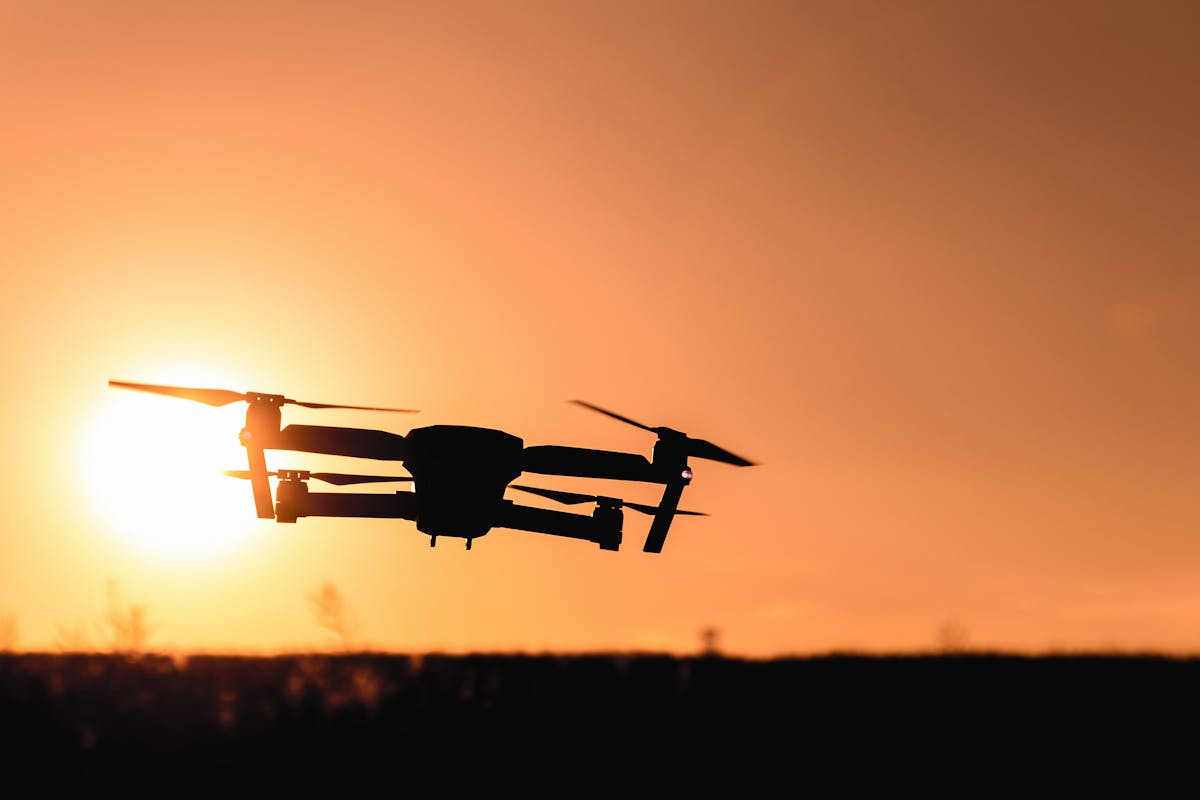
Discover how drone technology is solving critical challenges across Africa, from medical deliveries and precision agriculture to wildlife conservation and disaster response.
Introduction: Africa's Drone Revolution
Africa is emerging as a global leader in innovative drone applications, leveraging unmanned aerial vehicle (UAV) technology to solve some of the continent's most pressing challenges. From delivering life-saving medical supplies to remote villages to revolutionizing agricultural practices and protecting endangered wildlife, drones are transforming African communities in remarkable ways.
The unique challenges faced across African nations have created an environment where drone technology can make an immediate, measurable impact. Poor road infrastructure, vast distances between urban and rural areas, and limited access to critical services have positioned drones not as a luxury, but as a practical solution to real-world problems.
1. Medical Supply Delivery: Saving Lives from the Sky
Zipline: The Success Story from Rwanda
Perhaps the most celebrated drone initiative in Africa is Zipline's medical delivery service in Rwanda. Launched in 2016, Zipline operates the world's first national drone delivery network, delivering blood, plasma, and medical supplies to remote health facilities across the country.
The impact has been extraordinary. Rwanda's mountainous terrain and limited road infrastructure previously meant that emergency blood deliveries could take hours or even be impossible during rainy seasons. Now, Zipline's drones can deliver critical supplies to any of Rwanda's 21 transfusion centers within 30 minutes of receiving an order.
Key Statistics:
- Over 400,000 medical deliveries completed across Rwanda and Ghana
- Average delivery time reduced from 4 hours to 30 minutes
- Zero-emission electric drones reducing carbon footprint
- 24/7 operations regardless of weather conditions
- Serving over 2,000 health facilities across both countries
Expanding Beyond Blood: COVID-19 Response
During the COVID-19 pandemic, Zipline's service expanded to include vaccine deliveries, PPE, and test samples. In Ghana, the company established four distribution centers serving 2,000 health facilities, demonstrating the scalability of drone delivery systems.
2. Precision Agriculture: Feeding the Future
Transforming Farming Practices
Agriculture employs over 60% of Africa's workforce, yet many farmers lack access to modern agricultural technology. Drones are changing this equation by providing affordable, accessible precision agriculture tools that were previously available only to large commercial operations.
Key Agricultural Applications:
Crop Monitoring and Health Assessment
Equipped with multispectral cameras, agricultural drones can capture detailed images of crop health, identifying issues like pest infestations, nutrient deficiencies, or water stress before they become visible to the naked eye. This early detection allows farmers to take targeted action, reducing crop losses and optimizing yields.
Precision Spraying and Seeding
Drone-based spraying systems can apply fertilizers and pesticides with remarkable precision, reducing chemical usage by up to 30% compared to traditional methods. This not only cuts costs but also minimizes environmental impact and reduces farmer exposure to harmful chemicals.
Irrigation Management
Thermal imaging drones help farmers optimize water usage by identifying areas of crops that are water-stressed, enabling targeted irrigation that conserves this precious resource while maximizing crop health.
Success Stories:
- In Kenya, smallholder maize farmers using drone technology have reported yield increases of 15-25%
- Nigerian rice farmers reduced pesticide costs by 40% through precision drone spraying
- South African vineyards improved grape quality and reduced water usage by 20% using drone monitoring
3. Wildlife Conservation and Anti-Poaching
Protecting Africa's Natural Heritage
Africa's iconic wildlife faces constant threats from poaching and habitat loss. Drones have become an invaluable tool in conservation efforts, providing cost-effective surveillance capabilities that would be impossible to achieve with ground patrols alone.
Conservation Applications:
Anti-Poaching Patrols
Thermal imaging drones conduct night patrols across vast conservation areas, detecting poachers and alerting ranger teams in real-time. In Kenya's Ol Pejeta Conservancy, drone surveillance has contributed to a 50% reduction in poaching incidents since implementation.
Wildlife Population Monitoring
Drones equipped with high-resolution cameras and AI-powered image recognition software can conduct wildlife censuses more accurately and less invasively than traditional methods. This data is crucial for conservation planning and assessing the effectiveness of protection measures.
Habitat Mapping and Assessment
Conservation organizations use drones to monitor habitat changes, track deforestation, and assess the impact of human activities on ecosystems. This information guides strategic conservation decisions and helps secure funding for protection efforts.
Notable Projects:
- Air Shepherd uses predictive analytics and drones to prevent elephant and rhino poaching across southern Africa
- Namibia's Ministry of Environment employs drones to monitor desert elephant populations
- Tanzania's national parks use thermal drones for nighttime anti-poaching operations
4. Infrastructure Inspection and Development
Building the Future
Africa's infrastructure gap presents both a challenge and an opportunity. Drones are accelerating infrastructure development and maintenance by providing rapid, cost-effective inspection and surveying capabilities.
Key Applications:
Power Line and Pipeline Inspection
Drones can inspect thousands of kilometers of power lines, pipelines, and telecommunications infrastructure in a fraction of the time required by traditional methods, identifying maintenance needs before failures occur.
Road and Bridge Assessment
Post-disaster assessments that would traditionally take weeks can now be completed in days, enabling faster response and recovery. Drones also monitor ongoing construction projects, improving project management and quality control.
Urban Planning and Development
Cities across Africa use drone surveys to create detailed 3D models for urban planning, informal settlement mapping, and infrastructure development planning. This technology provides decision-makers with unprecedented spatial data accuracy.
5. Disaster Response and Humanitarian Aid
Rapid Response Capabilities
When natural disasters strike, drones provide critical situational awareness and support relief efforts in ways that were previously impossible.
Emergency Applications:
- Rapid damage assessment after floods, earthquakes, or cyclones
- Search and rescue operations using thermal imaging to locate survivors
- Delivery of emergency medical supplies to isolated communities
- Communication network restoration through temporary drone-based relay systems
- Mapping safe routes for ground teams through damaged areas
Recent Examples:
During Cyclone Idai in Mozambique (2019), drones helped map flooded areas, assess infrastructure damage, and coordinate relief efforts, significantly accelerating the humanitarian response. In Ethiopia, drones have been used to assess drought conditions and guide food aid distribution to affected communities.
6. Mining and Natural Resource Management
Optimizing Resource Extraction
Africa's mining industry is adopting drone technology for safer, more efficient operations:
- Surveying and mapping mining sites with centimeter-level accuracy
- Monitoring stockpile volumes and optimizing inventory management
- Conducting safety inspections in hazardous areas without risking personnel
- Environmental monitoring and rehabilitation tracking
- Detecting unauthorized mining activities
7. E-Commerce and Logistics
The Future of African Delivery
While still in early stages, several companies are piloting drone delivery services for e-commerce and logistics:
In South Africa, the Aerobotics platform supports agricultural exports by providing quality assurance through aerial inspections. Other initiatives are exploring last-mile delivery solutions for urban areas where traffic congestion makes traditional delivery inefficient.
Challenges and Opportunities
Regulatory Framework
Rwanda's progressive approach to drone regulation has created a blueprint for other African nations. The country's streamlined approval process has enabled rapid deployment while maintaining safety standards. Other nations are now developing similar frameworks to encourage innovation while ensuring public safety.
Technical Challenges:
- Limited telecommunications infrastructure in rural areas
- Battery life constraints for long-distance operations
- Weather conditions affecting flight operations
- Initial capital investment requirements
- Need for trained operators and maintenance personnel
Opportunities:
- Leapfrogging traditional infrastructure limitations
- Creating high-tech employment opportunities
- Attracting international investment and partnerships
- Developing local drone manufacturing capabilities
- Regional knowledge and technology transfer
Economic Impact and Job Creation
The drone industry is creating new economic opportunities across Africa. From pilots and technicians to data analysts and entrepreneurs, drone technology is generating employment in high-skill sectors. Training programs and partnerships with universities are developing local expertise, ensuring that African nations can maintain and expand these technologies independently.
The African Drone Forum, held annually in Rwanda, has become a major gathering point for innovators, policymakers, and investors, fostering collaboration and knowledge sharing across the continent.
The Road Ahead: Innovation and Scaling
Emerging Technologies
The next generation of drone applications in Africa will leverage advances in artificial intelligence, 5G connectivity, and battery technology:
- Autonomous swarm operations for large-scale agricultural monitoring
- AI-powered analysis of aerial imagery for faster decision-making
- Extended range capabilities enabling inter-city deliveries
- Integration with other technologies like IoT sensors and satellite data
- Development of locally designed and manufactured drone systems
Policy Recommendations
To maximize the benefits of drone technology, African governments should consider:
- Developing clear, progressive regulatory frameworks that encourage innovation
- Investing in telecommunications infrastructure to support drone operations
- Creating training programs to develop local expertise
- Establishing public-private partnerships to scale successful pilots
- Facilitating regional collaboration and standardization
Conclusion: Africa's Technological Leap
Drone technology represents more than just a technological advancement for Africa. It exemplifies how the continent is leveraging innovation to address fundamental challenges in healthcare, agriculture, conservation, and infrastructure development. Rather than simply adopting technologies developed elsewhere, African nations are pioneering unique applications tailored to local needs and conditions.
The success stories emerging from Rwanda, Ghana, Kenya, and other African nations demonstrate that when the right technology meets genuine need, supported by progressive policy frameworks, transformational change is possible. As drone technology continues to evolve and costs decrease, its impact across Africa will only grow, touching more lives and solving more challenges.
For investors, entrepreneurs, and policymakers worldwide, Africa's drone revolution offers valuable lessons about innovation, adaptation, and the power of technology to drive inclusive development. The continent is not just participating in the drone revolution; it's helping to lead it.
Key Takeaways
- Africa is a global leader in practical drone applications, particularly in medical delivery and agriculture
- Zipline's operations in Rwanda and Ghana have completed over 400,000 medical deliveries, saving countless lives
- Drone technology is helping farmers increase yields, reduce costs, and practice more sustainable agriculture
- Conservation efforts are being enhanced through drone-based anti-poaching and wildlife monitoring
- Infrastructure development and disaster response capabilities are accelerating across the continent
- Progressive regulatory frameworks like Rwanda's are enabling rapid innovation and deployment
- The drone industry is creating new high-skill employment opportunities across Africa
- Continued investment in infrastructure, training, and policy development will expand the impact of drone technology
The drone revolution in Africa is just beginning, and its potential to transform lives and communities across the continent is truly extraordinary.